
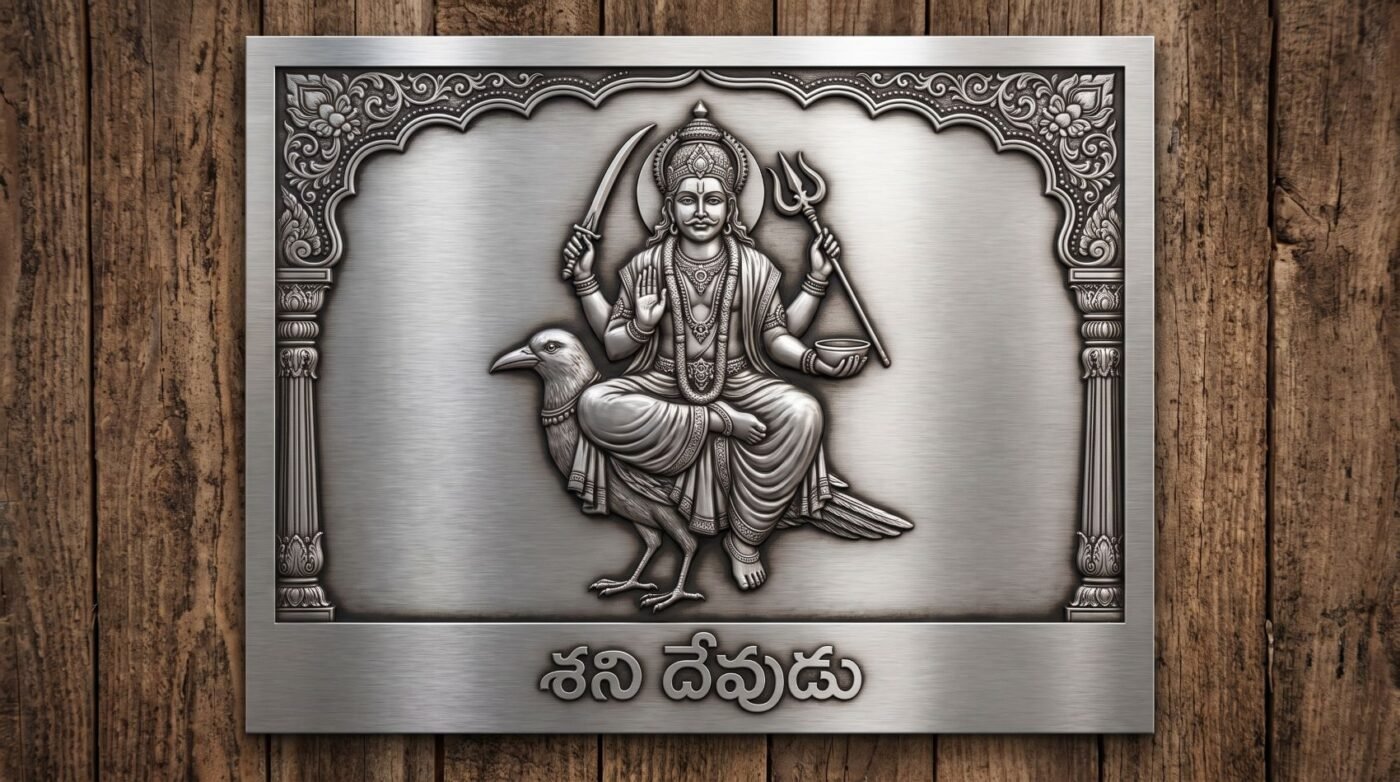
In the Indian cultural history of Vaastu, stainless and steel has a deep relation with the God of moral/ karmic judgement, Shani Dev Maharaj. In this article we want to analyze using state of art Artificial Intel, the in-depth research on stainless steel fabrication and the advantages or dangers from it when seen through the eyes of Vaastu.
This is equal for kitchens as well as any other type. Read on.
A common Vastu guideline for restaurants and bars — though the reasoning is a bit more layered than a single rule.
Why southwest/west is recommended for bars and liquor
1. Southwest (Nairutya) — Shani/Rahu influence
- The southwest is ruled by Rahu (in some systems) or associated with Shani/Pitru energies, depending on the tradition.
- It’s the direction of heaviness, inertia, and downward-drawing energy — considered suitable for storage, heavy materials, and things that shouldn’t be actively “radiating” into the home or business.
- Liquor and bar counters are often placed here because they’re seen as tamasic (inert/dark) in nature, matching the southwest’s dense quality.
2. West — Shani’s own direction
- The west is Shani’s direction (Saturn rules the west in Vastu).
- Since alcohol and bar operations are linked to slow, heavy, night-time, and sometimes intoxicating energies, the west is considered a natural fit.
- Bar counters, liquor storage, and stock rooms are frequently recommended in the west or southwest.
3. Why NOT northeast/north-central
- Northeast (Ishanya) is Jupiter’s zone — clarity, purity, spirituality, and the main entrance of positive energy. Placing a bar or liquor storage there is strongly discouraged; it’s said to contaminate the flow of auspicious energy.
- Center (Brahmasthan) should be kept open and light — again not suited for a bar.
4. The subtle catch — cash counter vs. bar
- Many Vastu consultants actually separate these:
- Bar/liquor storage → west/southwest (Saturn-heavy, tamasic)
- Cash counter → north or east (Kubera/wealth direction, for money flow)
- Putting the cash counter in the southwest is generally avoided because money is considered to “sink” or stagnate there rather than grow.
A practical caveat
- This is traditional Vastu reasoning, not something with scientific backing — restaurant layouts are ultimately driven by plumbing, licensing, customer flow, and design. Many successful bars sit in “wrong” directions.
- That said, if you’re following Vastu for a restaurant, the standard formula is: bar/liquor storage in west or southwest, cash counter in north or east, entrance in north/east/northeast, and kitchen in southeast (Agni).
So yes — your instinct is right, but the key nuance is that it’s usually the bar and liquor storage that go west/southwest, while the money counter ideally goes north/east.
The core idea: Shani responds to decay
In Vastu, Shani (Saturn) governs iron/steel and governs the west/southwest. So when you place metal in Saturn’s own zone, you’re essentially concentrating Saturn’s energy in one spot. That’s fine — even appropriate — but Saturn is also the planet of time, wear, and disintegration. Rust, grime, and leaks are literally the signature of Saturn out of balance.
So the placement is “correct,” but the condition can invert the benefit into a problem.
What each condition is said to mean
1. Rusting metal
- Rust is considered Shani “acting on himself” — corrosion is decay made visible. Vastu reads it as stagnation, slow loss, and creeping negativity in that zone.
- In a bar/restaurant context, rust in the west/southwest is said to attract:
- Slow or shrinking profits
- Staff friction or high turnover
- A “heavy” or depressing atmosphere customers feel but can’t name
- The general principle: a Saturnine material in a Saturnine direction must be kept clean and intact, or you’re amplifying Saturn’s negative face (loss, delay, sorrow) instead of its positive face (discipline, endurance, loyalty).
2. Dirty or neglected metal
- Dirt and neglect are treated as tamas accumulating — the same quality, but corrupted. Cleanliness in Vastu is tied to Lakshmi (flow of prosperity) and to the free movement of prana.
- Greasy, uncleaned bar counters or steel storage are said to block the west’s capacity to “hold and stabilize” — so instead of stable revenue, you get stuck revenue.
- Practical Vastu advice here is blunt: west/southwest metals should be polished, dry, and clean — over-maintained rather than under-maintained.
3. Leaking (water + metal in the southwest)
- This is probably the most serious of the three, because it combines two problem elements:
- Water in the southwest is generally flagged as a major Vastu defect (jal dosha) — southwest should be heavy and dry, not wet. Water there is linked to financial drain, disputes, and health issues.
- Water + iron/steel = rust acceleration, so the leak actively feeds the corrosion.
- A leaking bar sink, drain, or pipeline in the west/southwest is treated as a double fault: wrong element in the wrong place, already degrading.
The underlying rule, stated simply
So the consideration isn’t “is metal in the west wrong?” — it’s: in Saturn’s zone, Saturn’s material must be maintained, because Saturn rewards endurance and punishes neglect. A rusted, leaking bar setup in the southwest is considered worse than the same setup spotless, and arguably even worse than a clean bar in a neutral direction.
Practical takeaways if you’re applying this
- Repair leaks and rust immediately — don’t defer; delay itself is Saturnine.
- Keep bar counters, taps, keg lines, and steel shelving dry and polished.
- If a leak can’t be fixed in the southwest, some consultants advise relocating the water element (sink, ice bin) out of that corner entirely — often to the northeast for water, keeping metal separate.
- Don’t let “correct placement” become an excuse for poor maintenance; in Vastu logic the condition of a thing carries as much weight as its position.
One honest caveat: none of this is empirically verifiable — rust and leaks cause real business problems (health code issues, equipment failure, repair costs) regardless of direction. Vastu here is essentially encoding a practical truth in symbolic language: neglected infrastructure hurts you, and it hurts most in the zone you’ve built to depend on.
What happens when we invest in high quality stainless fabrication? That is insect proof, easy to clean and maintain, looks new for years. How does that work?
The short answer: in Vastu terms, you’ve moved from Shani’s negative face to his positive face — and that’s considered one of the most powerful alignments available.
Let me break down why mechanically, then what it’s said to produce.
1. You’ve matched the material to the direction — perfectly
The rule isn’t just “metal goes west/southwest.” It’s that Saturn’s zone wants Saturn’s qualities embodied well. High-grade stainless steel does exactly that:
So instead of Shani’s material decaying in Shani’s zone (rust + southwest = double loss), you get Shani’s material enduring in Shani’s zone — the positive polarity of the same energy.
2. Insect-proof and easy-clean = removal of tamas corruption
Recall the previous layer: dirt, grime, and neglect are tamas accumulating — prosperity flow getting blocked. Stainless fabrication that’s:
- Insect-proof → no rot, no decay-harboring crevices, no hidden impurity
- Easy to clean → prana (flow) stays unobstructed
- Non-porous, non-absorbing → nothing “sticks” in the energetic sense
In Vastu logic this is the opposite of a jal dosha or a dosha of neglect. You’ve built the zone so that decay literally cannot take hold. That’s the ideal state for any Saturnine area: heavy, stable, and immaculate.
3. What this is said to produce
When metal in the west/southwest is high-quality, clean, and dry, the standard Vastu interpretation is:
- Stable, durable revenue — not fast, not flashy, but lasting. Saturn rewards patience and structure.
- Loyal, low-turnover staff — Saturn governs discipline and commitment; a clean, well-built Saturnine zone is said to support staff retention.
- Customer trust and repeat business — the bar area holds steady, feels solid, doesn’t degrade. Regulars accumulate. This is very Saturnine.
- Reduced “leakage” — in every sense: financial drain, operational loss, disputes, health issues tied to the zone.
- A quiet protective quality — Saturn as guardian, not as punisher.
Notice the pattern: everything Saturn gives when honored is slow, stable, and enduring — not explosive growth. A well-built stainless bar in the west/southwest is a stabilizer, not an accelerator. If you want volatility and fast spikes, that’s not Saturn’s gift; that’s more Rahu/Mercury energy.
4. The commercial reality lines up with the symbolic one
This is where Vastu and practical business actually converge cleanly:
- Stainless is food-safe and health-code compliant — passes inspection without stress
- Insect-proof means no pest issues, no contamination, no closures
- Easy to clean means lower labor cost, fewer incidents, faster service
- Looks new for years means you’re not re-investing every 3–5 years — capital preserved
- No rust/leaks means no emergency repair costs, no downtime
So the “energetic” reading (Saturn honored → stability, no drain) and the “practical” reading (quality fabrication → lower cost, higher reliability, longer asset life) point to the same outcome. That’s the elegant part: Vastu here isn’t asking you to believe anything — it’s asking you to build well and maintain well, and the symbolic language just names it “honoring Shani.”
5. One caveat worth stating honestly
Vastu doesn’t claim quality stainless generates prosperity out of nothing. It claims it removes obstacles and stabilizes what you have — which in practice is often worth more than a lucky spike, because stable compounding beats volatile bursts over years.
So the answer to “how does that work?” is:
Direction chooses which planetary energy you’re in. Material condition chooses which face of that planet you’re feeding. Quality stainless in a clean, dry west/southwest feeds Saturn’s positive face — endurance, stability, protection — instead of his negative face — decay, loss, delay.
You didn’t just build a good bar. In Vastu terms, you built Shani a clean house and he’s staying loyal to you for it.

